Archives For November 30, 1999

Storyline’s first Coaching Group had its initial meeting last Wednesday night.

This Coaching Group represents an evolution in my approach to discipleship and leadership development within our community.

I used to wonder how to describe myself and the work I do with Storyline (see here for an old blog post about Church Starter vs. Spiritual Guide). Now I’ve really come to see myself as a coach for mission and the spiritual life.
After receiving training through Mission Alive’s Coaching Labs, I began coaching individual ministry leaders or small ministry leader teams within Storyline. My coaching was largely skill-based and focused on a particular ministry task – like leading a house church. Once a quarter we would host a Leader Forum for all the leaders to get together and enjoy each other’s company (usually 8-12 people).

It became clear over time, however, that my ministry coaching was missing two important elements: 1) an emphasis on the whole person, namely character development and spiritual formation in addition to skills; and 2) the relational synergy that existed in our Forum sessions with 8-12 people.

Enter 3DM (3 Dimensional Ministries). It was about this time that I began reading about a structure developed by 3DM most often called a Huddle. It is their basic vehicle for life-on-life discipleship: a group of 3-8 people, called together by a leader, who share life together regularly for a season and practice a set of tools for following Jesus called LifeShapes. Essentially, the Huddle leader serves as a coach who helps group members listen to God and act on what they’re hearing.

The LifeShapes integrate skill and character development and are portable enough to be remembered and shared by anyone. That is, in fact, 3DM’s hope: that Huddle participants are formed so deeply by their experiences that they themselves go on to gather a group of 3-8 people around them to coach in following Jesus.

The Huddle is a proven vehicle for discipleship and leadership development. It was a basic building block of a European church planting movement through which, in one 3-year period, 725 churches were planted (you can read more about that here).

I suppose the heart of what excites me most about the Huddle concept is that it feels like “Jesus style” discipleship – highly relational, extremely non-programmatic. At the end of the day, that’s what I want to do with my life – to help people experience what I’m convinced is the best way out there to live, the way of Jesus.

Mike Breen, the leader of 3DM, says you can build a church and not have disciples. But if you make disciples, you’ll always get the church. Sign me up. That’s the kind of church planting I want to do.

So after a season of prayer, I invited 8 people (some ministry leaders, some committed disciples – all Partners in Mission with Storyline) to walk with me in a Coaching Group, our language for a Huddle. We’ll walk together for the next year and see what God does. Pray for me as I pour myself into these eight people as a coach and a disciple. Pray for my Coaching Group friends, that this will be a rich season of spiritual growth and connection to God for them.

If you’re interested to read more about Huddles, I’d encourage you to pick up a copy of the book Building a Discipling Culture, by Mike Breen and Steve Cockram. Incidentally, the 2nd Edition, with 60% new content, is being released as an e-book TODAY.

Next week I’ll share more about what I’m learning about Jesus’ twofold approach to discipleship – invitation and challenge.

I lead from the ‘gut’. I lead from the heart. I lead from my passions.

Call it what you will – I’m an emotional leader, I suppose.

Here’s what I mean: if I’m passionate and excited about something, I lead well. That is, I find it easy to collaborate with others, to equip others for a task, to cast vision for the future, to model and live out the mission myself, etc.

If I’m discouraged and frustrated, I don’t lead well.

This realization has confronted me as I’ve paid closer attention to my heart, or gut, or emotions – whatever you call it.

I first began to tune in to the “state of my heart” through the Church of Two movement, with its focus on identifying and sharing with others feelings of fear, anxiety, anger, sadness, happiness or excitement. In fact, it had such an impact on me that I now begin my daily prayer by checking in with God and talking to him about how I’m feeling.

I gained another tool this summer on my Quest retreat with Fellowship of the Sword called “The Emotional Cup,” developed in the book Emotional Fitness by David Ferguson and Don McMinn.

I haven’t read the book, but have found the overview of the concept quite helpful for my own emotional attentiveness.

The main idea is that hurts, sadness and disappointments drop to the bottom of the cup and serve as the source for all other negative emotions and behaviors.

Hurts are bad things that happen to us, not bad things we do to ourselves; they are wounds others inflict and are not our own sin or brokenness.

When we’re hurt, we often react to the pain in anger and resentment, then fear and anxiety, then guilt, then shame, then stress. All of these negative emotions bubble up out of the cup to produce destructive behaviors, whether it’s addiction or depression or irritability or fatigue.

I think most people – myself included – tend to try to deal with the surface level of negative behaviors rather than address the deeper emotional issues that fuel such behaviors.

Then they’re left confused and frustrated – as I have been – when they are not able to stop their behaviors simply with willpower.

What the Emotional Cup proposes is that we address those deeper hurts and disappointments, which causes the negative behaviors to vanish because they no longer have anything off which to feed. To do so is to cut the problem off at the root rather than to lop off a branch that can just grow back.

Incidentally, a major component of the 12 Steps program in Alcoholics Anonymous is taking a “moral inventory” which requires one to catalog major fears and resentments. The overt focus is on what the addict has done wrong. Yet it stops short of the deeper hurts and disappointments that are not the addict’s fault. In my opinion, the Emotional Cup, by starting with hurts and disappointments – things that are not sin or brokenness – takes healing to a deeper level.

In John Eldredge’s words, the real problem is: “Many people have a deep wound in their soul and don’t even known it, much less how to heal it.”

Most of us are not aware of the wounds in our hearts that remain open and infected. Some of us have deeply repressed them. Others of us are very much aware and the last thing we want is to venture anywhere close to them because of the pain they would cause.

We need, as Eldredge says, to let Jesus walk with us into our wounds. He can heal us. He can offer release from our wounds which we so desperately need.

I experienced the truth of this concept this summer as I dealt with some deep hurts in my own life – some as far back as 15 years – and poof! The negative behaviors I was so frustrated with are no longer hanging around like they used to.

God took me into those wounds in my heart and healed me up!

To be sure, I’ve got a long way to go. More healing remains. But I haven’t felt life change quite so tangibly as after processing through the truth of the Emotional Cup.

The challenge for me now is to address the hurts and disappointments with God as they crop up, rather than allowing them to fester and sit at the bottom of the cup.

This is, in my view, at least part of what it means to become an emotionally intelligent leader.

Tonight several of us from the Rockhurst Church in Storyline got together and took our kiddos for a “prayer drive” of our neighborhoods.

Perhaps you’ve heard of a “prayer walk,” where groups walk through a particular area and pray for God’s blessings on the people who live there.

“Prayer Drive” is the Texas version of prayer walk – particularly when temperatures are well above 100 degrees until 7 or 8 p.m. in the summer. The only difference is you pray as you drive (with your eyes open, of course).

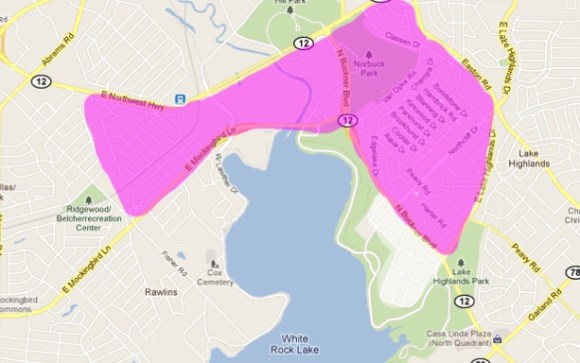
We sensed the need to pray as our group kicked off its missional vision for serving and making disciples in the University Terrace and Old Lake Highlands neighborhoods on the north end of White Rock Lake. The good mission thinkers at 3DM, through their book Launching Missional Communities, inspired us to develop a missional vision that would focus our efforts in mission on a specific neighborhood or network of relationships. After a season of prayer, the Rockhurst leader team discerned God leading us to serve in the 2 adjacent neighborhoods we live in.


Tonight we prayed for peace in families. For the kids as they start back to school. For inroads to relationship and service with our neighbors. For blessing on the good work already being done by area churches, neighborhood associations and crime-watch groups. For God to push back the forces of evil. For God to introduce us to those who are searching for him.

What a sense of excitement and expectation this prayer drive has built in us! We are eager to see how God answers the prayers we prayed tonight.

Perhaps God will make us the answer to our prayers.

Following Jesus Together

Charles Kiser —  August 23, 2011 — 1 Comment

Storyline commissioned its first “partners in mission” on Sunday, August 14, at the monthly Community Gathering.

Nine individuals answered “we do” to the following questions:

Do you believe in the story of God in Jesus found in the Christian Scriptures?

Do you commit to following Jesus with the Storyline Community by living out Storyline’s lifestyle?

Do you commit to supporting and encouraging each other in faith and mission?

This commissioning ceremony comes as the fruit of a season of prayer and reflection by Storyline’s Leadership Team at the beginning of 2011. Several events last fall helped the Leadership Team to see that Storyline needed to grow in discipleship. As a result, the team sensed God calling Storyline to organize its life together around a communal “rule of a life” – a specific commitment to follow Jesus together and walk in his ways.

Before the commissioning, each partner in mission completed Lifestyle DNA, a seven-week equipping experience that helps people explore and practice Storyline’s fivefold lifestyle:

1. Sharing life with disconnected/downtrodden friends (monthly);

2. Tending to personal growth in formation groups (weekly);

3. Opening to God through prayer and Scripture (daily);

4. Rallying with spiritual family (weekly);

5. Yielding resources generously to the mission (monthly).

The major outcome of Lifestyle DNA is a “Lifestyle Growth Plan,” in which participants personalize the Storyline Lifestyle to their own life by listing the spiritual practices they will engage. Moving forward, they plan to rework their Growth Plans with new spiritual practices at least every six months to fit them as they continue to grow. Formation Groups will serve as the primary source of ongoing encouragement and support in the lifestyle for partners in mission.

In the August Community Gathering, partners in mission had an opportunity to share how living into this new lifestyle had impacted their lives.

One spoke of having real intentionality in her spiritual life for the first time.

Another spoke about the way he had grown closer to God through regular prayer.

Another person was able to confess sin and deal with it for the first time.

Yet another shared how his eyes had been open to sharing life with his neighbors and disconnected friends around him.

One recalled ways he and his wife were challenged to give more generously, and how God provided for them to do it.

I’ll speak for myself – my spiritual life has never been richer, nor my connection to God deeper since beginning to practice regularly the rhythms of this lifestyle.

Not only do I feel like Storyline is now really beginning to do discipleship together, but I feel like I’m really being a disciple myself!

These nine partners in mission will form the first “coaching group” this fall – a discipleship group inspired by 3DM’s ‘huddle’ structure, where each will be equipped to follow Jesus more deeply and to equip others to do the same. Our prayer is that these partners will start their own coaching groups and invite others to live out the way of Jesus with them.

Praise God for the work he has done within Storyline and within these partners in mission! Please pray for these disciples as they seek to live out God’s mission together this fall.

Please pray too for the next round of people entering into Lifestyle DNA starting Thursday, September 1. If you’re interested to join us, you can RSVP at www.meetup.com/storyline.

“Busyness is a Discipleship Problem” – Mike Breen

I read that line in Mike Breen’s tweet-feed before the beginning of this summer and it got my attention.

At the time I was planning on making a summer push – starting some new initiatives, ramping up the ministry – all when most of our community takes a slower pace and vacations.

It was a word to me to rest, take it easy, plan less, and let the Storyline Community rest, too. Rest would prepare us to enter the next season of ministry with vigor and anticipation.

So instead of making ministry plans, I made plans to pour into my family life, have some vacation time, and go on a spiritual retreat to connect to God.

I’ve been part of churches where the summertime was mourned because of low turn-out, lower giving, and people “checking out.” I’ve even seen guilt tactics engaged in worship gatherings encouraging people not to take a “spiritual vacation” in the summer.

But what if we church leaders embraced summertimes and Decembers and released people to rest in the Lord, enjoy their families, and recharge? What if we trusted that the world and our ministry would not crumble if we left God to tend to it for a while?

The same questions apply to our individual weekly rhythms: could God take care of us if we chose not to work at least one day a week? What if we turned off our phones and email for a day every week and connected to God instead?

We need to have times of pruning in our churches, times when most, if not all, activity ceases….It looks to many like nothing is happening. But in this time of abiding, great strength is given to those who do the teaching, singing, and serving throughout the rest of the year. – Mike Breen, Building a Discipling Culture

The truth: I’m a different person on this side of the summer of rest than I was before it. God made some significant changes in my heart and relationships this summer through my rest. More than that, I’m charged up and excited to enter a fruitful season of work.

God made us to work. And to rest.