Archives For November 30, 1999

Guilt. Obligation. A sense of duty. A feeling within that it’s just what Christians are supposed to do. Curiosity. Desperation. Guidance.

All of these answers surfaced in response to this question in our Community Gathering conversation on Sunday.

I attended a Christian liberal arts university where students were encouraged to read through the entire Bible in a year. As incentive for staying the course, those who completed their reading were offered a free steak dinner at the President’s house.
I know the intentions for this approach were noble. The leaders of the University hoped that by reading the vast content of the Bible, students would know more about God and would grow in their relationship with God.

I’m afraid, however, that there are unintended consequences to such an approach to the Bible. I know because I fell victim to them.

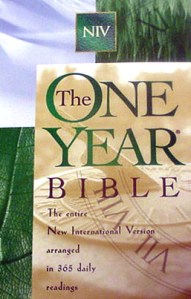
Though I never took the President up on his offer, I did decide to read through the Bible the year after I graduated. I bought a One Year Bible, which has daily readings from the Old and New Testament, and decided to make my way through it.

By the summertime, I had fallen about a month behind. I felt terrible about it. I was reminded of my shortcomings every day when I read the dates that accompanied the daily readings in the One Year Bible.

So on my summer vacation (in Destin, Florida!) I spent most of the time trying to catch up. I had to stay the course. I didn’t want to be a failure at Bible reading. I must have read hundreds of chapters of Scripture that week.

Here’s the thing: I don’t recall connecting to God in a significant way during that week. I can’t remember anything about it except that I was so caught up in catching up.

What this revealed to me is that it’s possible to read the Bible and yet miss the God of the Bible.

I was caught up in a paradigm for Bible reading that revolved around completion, information, and volume.

The side effects were:

  • guilt
  • failure
  • boredom
  • setting up those who read the most Bible as an elite class of people
  • and most significantly, missing God.

Jesus critiqued a similar impulse in the religious leaders of his day when he pointed out that they went to the Scriptures to find eternal life but missed that the Scriptures testified about Jesus and thus refused to receive eternal life from him (John 5:39-40). They read the Bible but missed the God of the Bible.

In the John 5 story, Jesus simultaneously points to a different paradigm for Bible reading, one that revolves instead around connection, relationship, communication, and interaction. The Bible serves as a witness that introduces us to God. The Bible is a conversation piece through which we interact with God.

What would it look like to read the Bible in such a paradigm?

  • We’d read less. But we’d read enough to get the gist of a story, text or thought, but no so much that we weren’t able to slow down and listen to God through it. Certainly there are seasons where it’s necessary to read a greater volume of Scripture (e.g., seminary), but even then it’s critical to translate the learning into conversation with God.
  • We’d attend to “heart tugs”. We’d pay attention to verses or phrases that prick our hearts, convict us, comfort us, or challenge us and we’d reflect on them in silence.
  • We’d interact with God about it. We would spend most of our time in dialogue with God about what we’re reading – listening for how we need to grow and change, or sitting peacefully in his presence with the knowledge of who he is.
  • We’d return to those Scriptures again and again. There’s no need to return to passages we’ve read in the completion paradigm – because we’ve completed them! But in a connection paradigm, we can return to them again and again with God to let him form us and shape us.

Dallas Willard says:

Do not try to read a great deal [of Scripture] at once. As Madam Guyon wisely counsels, ‘If you read quickly, it will benefit you little. You will be like a bee that merely skims the surface of the flower. Instead, in this new way of reading with prayer, you must become as the bee who penetrates into the depths of the flower. You plunge deeply within to remove its deepest nectar.’ …It is better in one year to have 10 good verses transferred into the substance of our lives than to have every word of the Bible flash before our eyes.

This kind of Bible reading is far from boring or guilt-inducing. Encountering God through Scripture will keep you coming back again and again.

How does this analysis compare to your own experiences? What motivates you to read the Bible?

The Deep Ground

Charles Kiser —  October 4, 2011 — 3 Comments

I had an insightful conversation recently with Randy Harris about the spiritual life.

Randy, giving credit to the work of Martin Laird in Into the Silent Land, described three postures of discipleship.

“The first operates from up here,” Randy said, moving his hand up by his head. “Here we work out of our brilliance, out of our giftedness, out of our understandings.”

I suspect that most young people (twentysomethings down) take this posture in life and discipleship. Perhaps this suspicion is rooted in my own admission that I’ve lived most of my life out of this posture – and, as you’ll see, it’s nothing to be proud of.

“The second [posture] operates from here,” moving his hand back and forth further down by his chest. “Here we work out of a keen awareness of our own brokenness, our limitations, our struggles and turmoil.”

In the past few years habitual patterns of sin (like anger, pride and lust) moved me to this posture of discipleship. It reminds me of the words of a graduate school professor who said that we twentysomething seminarians needed a few more years of struggling with sin so that we could recognize the depth of humanity’s brokenness (and our own).

“There’s a third way that operates from here, ” Randy said as he moved his hand down by his waist in the chair he was sitting in. “We hardly have language to describe this place. So few find it. It is the deep ground of God.”

“What exactly is this deep ground?” I asked.

“It’s God. It’s God in us. It’s your true self. It’s the Holy Spirit. It’s silence. It’s the place where you stare down your brokenness in silence and tell it to back off. It’s the Center.”

He’s right – I’m not sure even how to describe it. But I think it’s the place where we discover God. Where we encounter God. And after the encounter, where we sit in deep peace.

I’ve only touched the edge of the deep ground’s garment in my life – if that.

The key, Randy says, is to find the deep ground of God in contemplation (silence) and then begin to live out of it in every moment of our daily lives. That journey lasts a lifetime.

Laird adds that “union with God not something we are trying to acquire; God is already the ground of our being.” The real issue in finding the deep ground is to realize that “we live, move and have our being in God” – that we, in fact, are already rooted in the deep ground, though not consciously aware of it.

The extent to which we realize we are rooted is God is the extent to which we live out of the deep ground. Such realization is the work of contemplation and silence.

I’m eager to find this deep ground. It’s exciting to think that the deep ground is as deep as God is big, and that I can spend the rest of my life exploring it.

What about you? In what ways do you identify with these three postures of discipleship? Which posture are you currently living out of?

6 Ways to Tune into God

Charles Kiser —  September 13, 2011 — 2 Comments
  • Breathe deeply. Practice a breath prayer where you inhale God’s grace and exhale your brokenness and disappointments. The most famous breath prayer is called the Jesus Prayer: “[inhale] Lord Jesus Christ, Son of God, [exhale] have mercy on me a sinner.”
  • Write down your tasks. Sometimes we’re distracted by what we need to do – we’re afraid that if we take our minds off of it, we’ll forget to do it. So write it down – come back to it after you’ve tuned into God. God may just tune you in to what you need to do in a deeper way.
  • Create a mental picture. One of my favorite practices is to imagine what Jesus looks like and myself there with him. Talking to him. Listening to him.
  • Read a short passage from Scripture. Use the “read until” approach: read until something hooks you, resonates with you, speaks to you. You may not get past the first verse – and that’s okay! It’s not a Bible reading contest!
  • Sing or listen to music. Music has a way of centering us, especially repetitive choruses that focus on God.
  • Do something else. Most people have a hard time slowing their minds and hearts down while sitting still. So do something with which you have “subconscious competence” – something automatic – like driving, gardening, or exercising. Tune into God while doing something that keeps your body busy. Some of my best moments with God are on the treadmill.

Inspired by How to Hear God’s Voice by Mark & Patti Virkler.

I lead from the ‘gut’. I lead from the heart. I lead from my passions.

Call it what you will – I’m an emotional leader, I suppose.

Here’s what I mean: if I’m passionate and excited about something, I lead well. That is, I find it easy to collaborate with others, to equip others for a task, to cast vision for the future, to model and live out the mission myself, etc.

If I’m discouraged and frustrated, I don’t lead well.

This realization has confronted me as I’ve paid closer attention to my heart, or gut, or emotions – whatever you call it.

I first began to tune in to the “state of my heart” through the Church of Two movement, with its focus on identifying and sharing with others feelings of fear, anxiety, anger, sadness, happiness or excitement. In fact, it had such an impact on me that I now begin my daily prayer by checking in with God and talking to him about how I’m feeling.

I gained another tool this summer on my Quest retreat with Fellowship of the Sword called “The Emotional Cup,” developed in the book Emotional Fitness by David Ferguson and Don McMinn.

I haven’t read the book, but have found the overview of the concept quite helpful for my own emotional attentiveness.

The main idea is that hurts, sadness and disappointments drop to the bottom of the cup and serve as the source for all other negative emotions and behaviors.

Hurts are bad things that happen to us, not bad things we do to ourselves; they are wounds others inflict and are not our own sin or brokenness.

When we’re hurt, we often react to the pain in anger and resentment, then fear and anxiety, then guilt, then shame, then stress. All of these negative emotions bubble up out of the cup to produce destructive behaviors, whether it’s addiction or depression or irritability or fatigue.

I think most people – myself included – tend to try to deal with the surface level of negative behaviors rather than address the deeper emotional issues that fuel such behaviors.

Then they’re left confused and frustrated – as I have been – when they are not able to stop their behaviors simply with willpower.

What the Emotional Cup proposes is that we address those deeper hurts and disappointments, which causes the negative behaviors to vanish because they no longer have anything off which to feed. To do so is to cut the problem off at the root rather than to lop off a branch that can just grow back.

Incidentally, a major component of the 12 Steps program in Alcoholics Anonymous is taking a “moral inventory” which requires one to catalog major fears and resentments. The overt focus is on what the addict has done wrong. Yet it stops short of the deeper hurts and disappointments that are not the addict’s fault. In my opinion, the Emotional Cup, by starting with hurts and disappointments – things that are not sin or brokenness – takes healing to a deeper level.

In John Eldredge’s words, the real problem is: “Many people have a deep wound in their soul and don’t even known it, much less how to heal it.”

Most of us are not aware of the wounds in our hearts that remain open and infected. Some of us have deeply repressed them. Others of us are very much aware and the last thing we want is to venture anywhere close to them because of the pain they would cause.

We need, as Eldredge says, to let Jesus walk with us into our wounds. He can heal us. He can offer release from our wounds which we so desperately need.

I experienced the truth of this concept this summer as I dealt with some deep hurts in my own life – some as far back as 15 years – and poof! The negative behaviors I was so frustrated with are no longer hanging around like they used to.

God took me into those wounds in my heart and healed me up!

To be sure, I’ve got a long way to go. More healing remains. But I haven’t felt life change quite so tangibly as after processing through the truth of the Emotional Cup.

The challenge for me now is to address the hurts and disappointments with God as they crop up, rather than allowing them to fester and sit at the bottom of the cup.

This is, in my view, at least part of what it means to become an emotionally intelligent leader.

Tonight several of us from the Rockhurst Church in Storyline got together and took our kiddos for a “prayer drive” of our neighborhoods.

Perhaps you’ve heard of a “prayer walk,” where groups walk through a particular area and pray for God’s blessings on the people who live there.

“Prayer Drive” is the Texas version of prayer walk – particularly when temperatures are well above 100 degrees until 7 or 8 p.m. in the summer. The only difference is you pray as you drive (with your eyes open, of course).

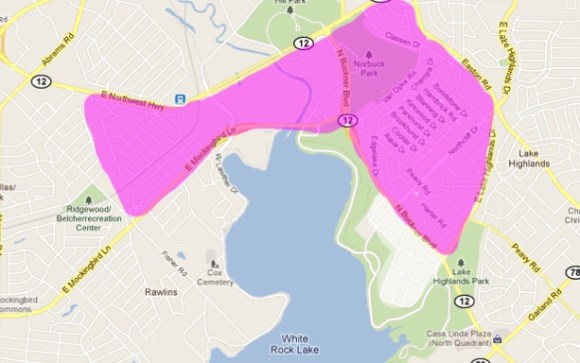
We sensed the need to pray as our group kicked off its missional vision for serving and making disciples in the University Terrace and Old Lake Highlands neighborhoods on the north end of White Rock Lake. The good mission thinkers at 3DM, through their book Launching Missional Communities, inspired us to develop a missional vision that would focus our efforts in mission on a specific neighborhood or network of relationships. After a season of prayer, the Rockhurst leader team discerned God leading us to serve in the 2 adjacent neighborhoods we live in.


Tonight we prayed for peace in families. For the kids as they start back to school. For inroads to relationship and service with our neighbors. For blessing on the good work already being done by area churches, neighborhood associations and crime-watch groups. For God to push back the forces of evil. For God to introduce us to those who are searching for him.

What a sense of excitement and expectation this prayer drive has built in us! We are eager to see how God answers the prayers we prayed tonight.

Perhaps God will make us the answer to our prayers.