Archives For November 30, 1999

Prayer of Humility

Charles Kiser —  May 18, 2011 — 1 Comment

O Jesus meek and humble of heart, Hear me.

From the desire of being esteemed,
From the desire of being loved,
From the desire of being extolled,
From the desire of being honored,
From the desire of being praised,
From the desire of being preferred to others,
From the desire of being consulted,
From the desire of being approved,
Deliver me, Jesus.

From the fear of being humiliated,
From the fear of being despised,
From the fear of suffering rebukes,
From the fear of being calumniated,
From the fear of being forgotten,
From the fear of being ridiculed,
From the fear of being wronged,
From the fear of being suspected,
Deliver me, Jesus.

That others may be loved more than I,
That others may be esteemed more than I,
That in the opinion of the world, others may increase, and I may decrease,
That others may be chosen and I set aside,
That others may be praised and I unnoticed,
That others may be preferred to me in everything,
That others may become holier than I, provided that I become as holy as I should,
Jesus, grant me the grace to desire it. Amen.

Written by Cardinal Merry del Val.

When Storyline began, we committed ourselves to live out a value for adaptability in mission, knowing that times would come when we need to adapt and flex because of changing circumstances.

I’m so thankful that this value has not remained at the aspirational level. We have indeed practiced it. For instance:

  • We thought we were going to be a “Sunday morning” church. But we adapted and morphed into a network of house churches.
  • We thought we were going to be a church for young adult professionals. But we adapted as we spent time among friends in poverty and welcomed them into our spiritual family alongside young adults.

I feel strongly that these adaptations were in sync with promptings from God’s Spirit.

And now, Storyline finds itself in a season of adaptation again this spring.

The Backstory

Last fall, several things happened that helped us to see that Storyline was “missing” something:

  1. Approximately 30% of our small community transitioned awaynone because of any conflict or bad feeling toward Storyline (praise the Lord). Mainly because of life transitions – new jobs, new cities, moving to be closer to family, etc.
  2. Storyline had plateaued in its growth and development in the nine months preceding the transitions. No new groups had started. About the same number of people were participating as were at the beginning of 2010. (This was a new trend for us – Storyline had doubled or tripled in size each of the preceding two years.)
  3. Participation in our Formation Retreats had dwindled significantly. We cancelled two Marvelous Light retreats in 2010.
  4. The equipping staff – Ryan Porche and I – had taken second jobs to help sustain our ministry financially which resulted in us working less with Storyline.

What did we make of it? What was missing?

After spending much time in prayer and discernment with the leadership team, we sensed that at the heart of our plateau was a struggle to do discipleship at a deeper level. Storyliners, both those with Christian backgrounds and those without, were not being adequately equipped to follow Jesus in a way that led them out in consistent mission.


It’s not hard to grow a church. It’s just really hard to make disciples. — Mick Woodhead

One reason for the discipleship deficit, we perceived, was because we had developed no way to allow participants within Storyline to make a commitment to following Jesus with Storyline. In an attempt to be non-institutional amidst a context where people are very suspicious of the institution, we had shrunk back from asking for people to commit to the life of Storyline in any formal way.

I’ve come to the conclusion that a ‘bar’ cannot be set in following Jesus unless there exists such an underlying covenant to journey together. Discipleship is too hard to hope that people will just get it on their own. We were made to follow Jesus in community – together – and that assumes some kind of commitment to each other.

I’ve had a hard time admitting this, particularly because I have absolutely hated the frequently unjust and inhospitable practice of “church membership” up to this point in my life. And that might not be saying it strongly enough.

Further, the communal nature of discipleship means that programs and events – like our worship gatherings, retreats, and even house church gatherings – cannot accomplish our goals for discipleship in and of themselves. Learning to follow Jesus is something that takes place in the context of day-to-day relationships, where the lifestyle of Jesus is rubbed off from more radical followers (leaders) to others.

Acts 2:42-47 seems to represent a kind of covenant that followers of Jesus in the early church made with each other: they “devoted themselves” to the apostles’ teaching, prayer, giving, sharing, doing life together, and worshiping.

How are we responding? How are we adapting?

My friend and fellow Mission Alive church planter Kester Smith with the Immanuel Community in Austin, Texas, painted a winsome picture of communal discipleship for me in a class at the ACU Summit in September 2010.

He spoke about how the Immanuel Community, out of struggles similar to Storyline’s, had developed a “Way of Life” – a rule or order – that the members of the community had committed to live out together. The Way of Life included things like daily prayer, weekly worship with the community, hospitality toward new people, service and confession. Sounds like Acts 2:42-47. (You can read the whole thing here.)

The Immanuel Community reflects a growing movement in missional communities toward a “communal rule” as the primary way of doing discipleship.

Alan Hirsch, in The Forgotten Ways, describes it as a shift of focus from core beliefs to core practices — a shift from asking what do followers of Jesus believe to how do followers of Jesus live?

Beliefs are certainly important. They just mean very little unless they are put to action. James says that passive belief is dead (James 2:17). “Even the demons believe.”


It is less important to ask a Christian what he believes about the Bible than it is to inquire what he does with it. — Leslie Newbigin

This “rule of life” approach to discipleship has become so helpful that Mission Alive, my resourcing organization, has made the development of a communal rule of life the focus of its week long Strategy Lab for church planters and church leaders.

As a result, the Storyline Leadership Team has prayed through and developed what we’re calling the “Storyline Lifestyle.” It is our first attempt at a communal rule of life in the way of Jesus. It is the way, in our particular locale, we live out the STORY of God:

  • Sharing life with disconnected or downtrodden friends at least weekly
  • Taking ownership of our spiritual formation in formation groups weekly
  • Opening ourselves to God through prayer and Scripture daily
  • Rallying together with our spiritual family at least weekly
  • Yielding our resources generously to the mission at least monthly

To equip our community to begin to live this lifestyle, we’ve created a 6-week bootcamp that’s called Lifestyle DNA. It’s a catechesis of sorts – spiritual training for newcomers to Storyline. We spend one week framing up the gospel and the lifestyle of Jesus as a response of gratitude to the grace God gives us in Jesus; then the remaining five weeks practicing each of the five life rhythms in community.

At the end of Lifestyle DNA, previously Christian participants can choose to partner with Storyline in its mission and are commissioned publicly in our community gatherings. Not-yet-Christians are given the opportunity to make the decision to follow Jesus and demonstrate their commitment to God and the community publicly in baptism.

After completing Lifestyle DNA, two things keep the lifestyle in front of Storyliners: 1) Formation Groups – gender specific groups of 2-4 people who gather for confession and prayer – are being retooled to flow out of the Storyline Lifestyle; 2) House church leaders will also help by sharing life with and coaching those who have decided to partner with Storyline in mission.

Our leaders have just finished a pilot run of Lifestyle DNA together, and already I can see how my life is changing. Parts of my brokenness are healing up; my connection to God has deepened; and I have a much keener sense of God’s presence when I’m on mission.

Pray for our community as we start the first community-wide Lifestyle DNA tomorrow night!

Stay tuned for upcoming conversations about how Storyline is changing. Part two addresses how Storyline will change structurally. Part three addresses how Storyline will become even more of a training ground for future church planters.

SHARE Prayer

Charles Kiser —  March 15, 2011 — 9 Comments

…There is nothing in Scripture to indicate that the biblical modes of God’s communication with humans have been superseded or abolished by either the presence of the church or the close of the scriptural canon. This is simply a fact, just as it is simply a fact that God’s children have continued up to the present age to find themselves addressed by God in most of the ways he commonly addressed biblical characters. The testimony of these individuals…should not be discarded in favor of a blank, dogmatic denial.

— Dallas Willard, Hearing God, 103

We cannot do true discernment when fear and anger are present.

Elaine Heath

I grew up believing that God’s communication outside of Scripture had in fact ceased. But as I look at Scripture — particularly Jesus’ words about the role of the Holy Spirit in John 14-16, and Paul’s words about the Spirit in 1 Corinthians 2 — I no longer believe that to be a tenable conclusion.

If God’s Spirit lives in those who believe and follow Jesus, and if the indwelling Spirit’s work is to illuminate truth to Christ-followers (as Scripture says it is), then it follows that the communication lines between God and humanity are still wide open and active.

I’ve found this to be true in my own prayer life over the past several years. God still speaks, especially through the still, small voice in our spirit.

If it’s easy to believe that the evil one can plant thoughts in our minds, how much more of a step is it to think that God does the same?

This line of thought unleashes excitement in me to know that I can be in an actual, conversational relationship with God.

My purpose in this post is not to get into the philosophical conversation about whether or not we can hear from God — though it’s a very important conversation. I’d encourage you to pick up Dallas Willard’s book on the subject: Hearing God. The parts of it that I’ve read are outstanding, especially the chapter on the still, small voice.

I only want to share a form of listening / relational prayer that has been a blessing to me for the past six months or so. It emerged as a hybrid of The Papa Prayer (by Larry Crabb), Church of Two prayer (particularly the work of Mark Virkler) and the traditional ACTS framework for prayer. In many ways, it’s a form of prayer that developed from the many questions that emerged for me out of listening prayer through Church of Two experiences – which you can find here.

I call it SHARE prayer. It has provided a framework for my conversations with God since the fall of 2010, and I’ve found it incredibly life-giving. It leaves me feeling like I’m connected to God, which I think is the point of prayer. It also lays a foundation for constant prayer and and listening throughout the day.

  • Share your heart with God
  • Humbly wait for God to present himself to you
  • Attend to your thoughts and write them down
  • Rejoice in and weigh what you hear
  • Entreat God to be at work in the world

A few observations about this framework:

  1. Sharing your heart with God comes from the CO2 framework about the “state of your heart” and PAPA Prayer’s “red dot – you are here.” I’ve found that it’s difficult to pray and listen if I’m not able immediately to deal with my anxiety before God. Otherwise I’m distracted by it throughout my prayers. In this framework it deals with it right away; and it’s quite relational and conversational to tell someone how you’re feeling.
  2. Humbly wait is the moment in this framework for silence and contemplation. We hear something only on God’s terms. We cannot manipulate God into telling us anything. Sometimes I don’t hear anything. My role is simply to make myself available to God by listening.
  3. Attend to your thoughts and write them down is from Virkler. My most random and spontaneous thoughts are sometimes the very thoughts God tries to use to get my attention. So I write them down and examine them. Sometimes God confronts me about ungodly behavior (like he did this morning), which leads to confession and repentance, and even the directive to make it right with the person I harmed.
  4. I’ve found that my listening is heightened when I’ve digested a bit of Scripture before praying. I really don’t think it matters what I read; just that I read. For instance, I hit the gym in the mornings before going into the office and read Scripture via IPad (whoot!) while I work out. When I get to the office and pray, I’ve already got some fodder for listening through my Scripture reading. In this way, SHARE prayer becomes a form of Lectio Divina (“divine reading”).
  5. When God responds, I feel like celebrating. I give thanks. I praise him. I worship him. The ‘R’ is a natural place for adoration and thanksgiving – from the old ACTS framework for prayer (Adoration; Confession; Thanksgiving; Supplication).
  6. It’s also important to weigh what we hear, because not everything comes from God – probably a lot of it doesn’t. The WEIGH acronym helps me here. Is what I’m hearing consistent with…
    • Wisdom
    • Entrusted counsel of friends and mentors
    • Introspection (how I feel; what I’m passionate about)
    • God’s character
    • Holy Scripture?
  7. The Entreat move comes from the desire to incorporate petitionary prayer into times of listening and contemplation. It is an important and substantial part of prayer and should not be neglected. But I love that it comes last, after I’ve related to God first – so that it’s clear to both my heart and God that I’m not praying solely for the sake of getting something from God. God is not a vending machine whose buttons I’m trying to push in prayer to get a goody.

What do you think? Try it on and let me know if it helps you relate to God – or even hear something from him!

The End of a Chapter

Charles Kiser —  February 1, 2011 — 5 Comments

Today marks the end of one chapter for Storyline and the beginning of a new one.

After months of discernment and prayer, we’ve sensed with our co-workers, Ryan and Claudia Porche, that God was leading them elsewhere to pursue their calling in music and spiritual formation ministry.

This is a bittersweet transition for me, certainly.

Ryan and Claudia are both some of the most intelligent, talented people I’ve been privileged to work with in my life.

They ‘get’ what it means to live on mission, to contextualize the gospel and to take risks for the sake of following Jesus.

Ryan used his tremendous administrative abilities to build infrastructure for Storyline that will remain long after he’s gone. He is a gifted musician, singer and worship leader. He has deep wells of love for people. He’s been one of my favorite co-workers in my life. We’re good friends and comrades.

Claudia used her significant organizing skills to make our monthly worship gatherings special times. She’s also a sharp thinker and has always asked great questions.

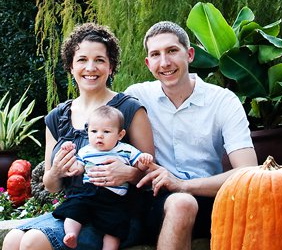
And then there’s Kaden, Ryan and Claudia’s seven-month old son. He’s a seriously cute kid, and Storyline is proud to have been the community into which he was born.

None of us – to piggback on comments the Porches have made about their time with Storyline – have any regrets.

What a great season of ministry it has been for us.

Alan Hirsch calls the bond that people share together around mission communitas. Community is shallow when compared to communitas. Communitas is the “Band of Brothers” dynamic. It’s the way Frodo and his friends looked at each other at the end of the Lord of the Rings triology. When you’ve been through thick and thin together, even a short glance at each other can communicate a bond and depth of relationship that one would struggle to describe with words. That’s communitas.

Our relationship with the Porches is our deepest experience of communitas so far. I look forward to ways our paths might cross again in the future, and know that we’ll always be able to pick life up with each other without missing a step because of the experiences we’ve shared together. Facebook will help, too.

We send them out with sadness, because no one in their right mind would send out people of the Porches’ caliber with immediate happiness. But we do send them out with joy, knowing that pursuing their deepest calling will ultimately be best for them and for Storyline in the long run.

Please pray for the Porches as they share conversations with other churches about their next step in ministry.

The Porches with some of their Storyline friends at last week's sending party

And please pray for Storyline as we move forward and search out future co-workers who would join us either to prepare for future church planting or to work with Storyline in the long term.

Feel free to send encouragement and blessing to the Porches via email at ryan.porche[at]gmail[dot]com and ceporche[at]gmail[dot]com.

I am no longer my own, but yours.
Put me to what you will, rank me with whom you will;
put me to doing, put me to suffering.
Let me be employed by you or laid aside by you,
enabled for you or brought low by you.
Let me be full, let me be empty.
Let me have all things, let me have nothing.
I freely and heartily yield all things
to your pleasure and disposal.
And now, O glorious and blessed God,
Father, Son, and Holy Spirit,
you are mine, and I am yours. So be it.
And the covenant which I have made on earth,
let it be ratified in heaven.
Amen.