SHARE Prayer

Charles Kiser —  March 15, 2011 — 9 Comments

…There is nothing in Scripture to indicate that the biblical modes of God’s communication with humans have been superseded or abolished by either the presence of the church or the close of the scriptural canon. This is simply a fact, just as it is simply a fact that God’s children have continued up to the present age to find themselves addressed by God in most of the ways he commonly addressed biblical characters. The testimony of these individuals…should not be discarded in favor of a blank, dogmatic denial.

— Dallas Willard, Hearing God, 103

We cannot do true discernment when fear and anger are present.

Elaine Heath

I grew up believing that God’s communication outside of Scripture had in fact ceased. But as I look at Scripture — particularly Jesus’ words about the role of the Holy Spirit in John 14-16, and Paul’s words about the Spirit in 1 Corinthians 2 — I no longer believe that to be a tenable conclusion.

If God’s Spirit lives in those who believe and follow Jesus, and if the indwelling Spirit’s work is to illuminate truth to Christ-followers (as Scripture says it is), then it follows that the communication lines between God and humanity are still wide open and active.

I’ve found this to be true in my own prayer life over the past several years. God still speaks, especially through the still, small voice in our spirit.

If it’s easy to believe that the evil one can plant thoughts in our minds, how much more of a step is it to think that God does the same?

This line of thought unleashes excitement in me to know that I can be in an actual, conversational relationship with God.

My purpose in this post is not to get into the philosophical conversation about whether or not we can hear from God — though it’s a very important conversation. I’d encourage you to pick up Dallas Willard’s book on the subject: Hearing God. The parts of it that I’ve read are outstanding, especially the chapter on the still, small voice.

I only want to share a form of listening / relational prayer that has been a blessing to me for the past six months or so. It emerged as a hybrid of The Papa Prayer (by Larry Crabb), Church of Two prayer (particularly the work of Mark Virkler) and the traditional ACTS framework for prayer. In many ways, it’s a form of prayer that developed from the many questions that emerged for me out of listening prayer through Church of Two experiences – which you can find here.

I call it SHARE prayer. It has provided a framework for my conversations with God since the fall of 2010, and I’ve found it incredibly life-giving. It leaves me feeling like I’m connected to God, which I think is the point of prayer. It also lays a foundation for constant prayer and and listening throughout the day.

  • Share your heart with God
  • Humbly wait for God to present himself to you
  • Attend to your thoughts and write them down
  • Rejoice in and weigh what you hear
  • Entreat God to be at work in the world

A few observations about this framework:

  1. Sharing your heart with God comes from the CO2 framework about the “state of your heart” and PAPA Prayer’s “red dot – you are here.” I’ve found that it’s difficult to pray and listen if I’m not able immediately to deal with my anxiety before God. Otherwise I’m distracted by it throughout my prayers. In this framework it deals with it right away; and it’s quite relational and conversational to tell someone how you’re feeling.
  2. Humbly wait is the moment in this framework for silence and contemplation. We hear something only on God’s terms. We cannot manipulate God into telling us anything. Sometimes I don’t hear anything. My role is simply to make myself available to God by listening.
  3. Attend to your thoughts and write them down is from Virkler. My most random and spontaneous thoughts are sometimes the very thoughts God tries to use to get my attention. So I write them down and examine them. Sometimes God confronts me about ungodly behavior (like he did this morning), which leads to confession and repentance, and even the directive to make it right with the person I harmed.
  4. I’ve found that my listening is heightened when I’ve digested a bit of Scripture before praying. I really don’t think it matters what I read; just that I read. For instance, I hit the gym in the mornings before going into the office and read Scripture via IPad (whoot!) while I work out. When I get to the office and pray, I’ve already got some fodder for listening through my Scripture reading. In this way, SHARE prayer becomes a form of Lectio Divina (“divine reading”).
  5. When God responds, I feel like celebrating. I give thanks. I praise him. I worship him. The ‘R’ is a natural place for adoration and thanksgiving – from the old ACTS framework for prayer (Adoration; Confession; Thanksgiving; Supplication).
  6. It’s also important to weigh what we hear, because not everything comes from God – probably a lot of it doesn’t. The WEIGH acronym helps me here. Is what I’m hearing consistent with…
    • Wisdom
    • Entrusted counsel of friends and mentors
    • Introspection (how I feel; what I’m passionate about)
    • God’s character
    • Holy Scripture?
  7. The Entreat move comes from the desire to incorporate petitionary prayer into times of listening and contemplation. It is an important and substantial part of prayer and should not be neglected. But I love that it comes last, after I’ve related to God first – so that it’s clear to both my heart and God that I’m not praying solely for the sake of getting something from God. God is not a vending machine whose buttons I’m trying to push in prayer to get a goody.

What do you think? Try it on and let me know if it helps you relate to God – or even hear something from him!

St. Baldrick’s

Charles Kiser —  March 4, 2011 — Leave a comment

I am issuing a challenge: I will shave my head at the upcoming St. Baldrick’s event if I raise $100 by March 26.

Do you want to see me bald?

St. Baldrick’s Foundation is a volunteer-driven charity that funds more in childhood cancer research grants than any organization except the U.S. government.

One of my friends in the Dallas Junior Chamber, Lucas, is organizing the event on behalf of his boss’s child.

I’m also using it as a reminder to continue to pray for and support our friends Derrick and Monika Paez, and their daughter Salomea who has leukemia.

If you have a personal vendetta against me or want to support cancer research for kiddos, please go to my participant webpage and donate for the cause!

http://www.stbaldricks.org/participants/charleskiser

The End of a Chapter

Charles Kiser —  February 1, 2011 — 5 Comments

Today marks the end of one chapter for Storyline and the beginning of a new one.

After months of discernment and prayer, we’ve sensed with our co-workers, Ryan and Claudia Porche, that God was leading them elsewhere to pursue their calling in music and spiritual formation ministry.

This is a bittersweet transition for me, certainly.

Ryan and Claudia are both some of the most intelligent, talented people I’ve been privileged to work with in my life.

They ‘get’ what it means to live on mission, to contextualize the gospel and to take risks for the sake of following Jesus.

Ryan used his tremendous administrative abilities to build infrastructure for Storyline that will remain long after he’s gone. He is a gifted musician, singer and worship leader. He has deep wells of love for people. He’s been one of my favorite co-workers in my life. We’re good friends and comrades.

Claudia used her significant organizing skills to make our monthly worship gatherings special times. She’s also a sharp thinker and has always asked great questions.

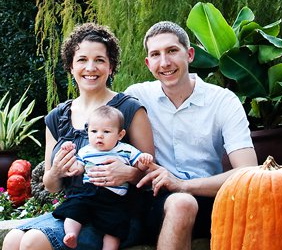
And then there’s Kaden, Ryan and Claudia’s seven-month old son. He’s a seriously cute kid, and Storyline is proud to have been the community into which he was born.

None of us – to piggback on comments the Porches have made about their time with Storyline – have any regrets.

What a great season of ministry it has been for us.

Alan Hirsch calls the bond that people share together around mission communitas. Community is shallow when compared to communitas. Communitas is the “Band of Brothers” dynamic. It’s the way Frodo and his friends looked at each other at the end of the Lord of the Rings triology. When you’ve been through thick and thin together, even a short glance at each other can communicate a bond and depth of relationship that one would struggle to describe with words. That’s communitas.

Our relationship with the Porches is our deepest experience of communitas so far. I look forward to ways our paths might cross again in the future, and know that we’ll always be able to pick life up with each other without missing a step because of the experiences we’ve shared together. Facebook will help, too.

We send them out with sadness, because no one in their right mind would send out people of the Porches’ caliber with immediate happiness. But we do send them out with joy, knowing that pursuing their deepest calling will ultimately be best for them and for Storyline in the long run.

Please pray for the Porches as they share conversations with other churches about their next step in ministry.

The Porches with some of their Storyline friends at last week's sending party

And please pray for Storyline as we move forward and search out future co-workers who would join us either to prepare for future church planting or to work with Storyline in the long term.

Feel free to send encouragement and blessing to the Porches via email at ryan.porche[at]gmail[dot]com and ceporche[at]gmail[dot]com.

Storyline, the Paezs, and friends got together this past Sunday night for the Leukemia and Lymphoma Society’s Light the Night Walk.

We walked on behalf of the Paezs’ three year-old daughter, Salomea, who is in treatment for leukemia. Team Salomea collectively raised more than $4,400 for the Walk.

For Storyline, this was a special night in the way of Jesus, showing mercy and support – just as he would – for those who need it.

Please continue to pray with us for Salomea’s full recovery.

Thanks to everyone that gave or walked. Thanks especially to Julie Kiser and Deborah McClain for their good work in organizing the event. Thanks to Monika Paez and Clint for their work on the T-shirt design. And thanks to Elizabeth Jackson for the beautiful pictures below. Enjoy.

Starting New Churches

Charles Kiser —  October 14, 2010 — 3 Comments

One of Storyline’s values is reproducibility. We acknowledge that healthy things reproduce: healthy plants drop seeds that create new plants; healthy animals mate and give life to new animals; healthy humans reproduce and give birth to babies.

That healthy things reproduce is true all throughout God’s kingdom, particularly in the church. Healthy followers of Jesus make new followers, and healthy churches start new churches.

I think the opposite is also true: unhealthy followers don’t attract new followers, and unhealthy churches don’t start new churches.

I did not become a church planter to start one church. I became a church planter to be part of a church planting movement. One practical expression of this conviction is Storyline’s commitment to give 10% of its offerings to the Harvest Fund for future church planting through Mission Alive. As of May, Storyline had given more than $7,000 to the Harvest Fund, which has helped four new churches get up off the ground so far this year. It’s a small start, but we know what God can do with small things…like mustard seeds.

Storyline has also made a commitment to invite church planters in-training into our midst – we call them “church planters in residence.”

One of my dreams for church planting has now come true: last month, we sent the Lewis family out to start a new church. They’re partnering with Mission Alive (our resource organization) and the Riverwalk Church in Wichita, KS to start a church in in the downtown area of that city. Watch this short video to hear the Lewises’ story.

My prayer is that this is the first of many churches Storyline will help to start either by offering itself as a training ground for future church planters or by providing financial support for new projects.

Pray with us, also, for the Lewises: that their house will sell; that they’ll find good teammates; that they’ll raise the rest of their financial support; and that the church they plant will bring more life to Wichita, KS.

Why do we plant churches? Because churches – when they’re healthy – bless people and the neighborhoods in which they live. That’s really all that God has ever wanted for the world that he made – so much so that God’s call to Abraham, the father of Israel and the grandfather of the church, was to be a blessing to all the people of the earth. More churches means more blessing for the world, and that’s a good thing.