Be Fruitful and Multiply

Charles Kiser —  September 15, 2008 — 9 Comments

Starting a new church is certainly full of challenge and struggle. In the words of Earl Creps: “Church planting is the art of surviving disappointment.” I’ve lived that statement on more than one occasion.

At the same time, new churches also provide times of intense joy and excitement. Just as we marveled when Ryan was born, so we find ourselves marveling at the way God is bringing Storyline to life.

Most recently we’ve been excited to anticipate and plan for our first house church multiplication. It’s been our dream from the beginning that Storyline would develop into a network of house churches: the first house church would start another, those would start others, and those would start others and so on.

Healthy things reproduce. Healthy plants bear seed that produce new plants. Healthy animals give birth to new animals. Healthy humans conceive new children. It’s the same in the kingdom of God – healthy disciples help to make new disciples and healthy churches start new churches.

Our first house church gathering has started to gain some traction in our community. New relationships have been formed. Unchurched and dechurched friends have started participating in the life of our church. New leaders are stepping up to the plate. This little community is already embodying in significant ways our values for dependence on God, mission, life change and genuine relationships.

So within the next few weeks we’ll branch out and start the second house church. We’ll have a special gathering where we reminisce about how God has been at work, commission the next generation of house church leaders and discern which house church God is calling each person to join in the future.

We’re also excited that later this fall we’ll start a monthly worship gathering that will draw our house churches together for times of worship, storytelling and vision casting. Larger worship gatherings will help to create a sense of synergy among house churches by helping them see that they are part of something bigger than themselves. These gatherings will also give us an opportunity for broader exposure in the surrounding communities of Uptown, Downtown and Oak Lawn.

We do not, however, envision that these larger worship gatherings will occur more than monthly, at least in the early stages of the church’s life. This is a strategic decision because to us the majority of church life and mission takes place in the context of smaller communities of faith. We don’t want our limited people resources to be wrapped up in planning for weekly worship gatherings such that we neglect to put most of our energies into developing house church life and mission.

Rejoice with us for the way God is at work in our midst. Pray for us as we seek to do the hard but rewarding work of multiplying.

Myth of a Christian Nation

Charles Kiser —  September 7, 2008 — 18 Comments

The best way to defeat the kingdom of God is to empower the church to rule the kingdom of the world—for then it becomes the kingdom of the world! The best way to get people to lay down the cross is to hand them the sword! (Myth of a Christian Nation, 94-95)

As our house church conversations on spirituality and politics draw to a close, I’m reading Greg Boyd’s Myth of a Christian Nation: How the Quest for Political Power is Destroying the Church. I’m really enjoying it. It’s challenging. I can see it making a lot of Christian people mad—and necessarily.

Boyd’s central thought is a comparison of the fundamental difference between the kingdom of God and kingdoms of the world (of which America is a part). The kingdom of the world, on one hand is a “power over” kingdom, a kingdom of the sword, a kingdom that carries out its agenda—even for justice—based on its ability to coerce people.

The kingdom of God, on the other hand, is a “power under” kingdom. It’s a kingdom of love, service and humility. This kingdom is embodied by the cross—God’s non-violent response to evil in the world. It is non-coercive. It is thus utterly incompatible with the kingdom of world because it is not inherently based on exercising power over people.

Given all this, I return to the question: what level of political participation can a citizen of God’s kingdom have in kingdoms of the world that are inherently counter to the politics of God’s kingdom? The question itself seems to lean toward less participation.

Boyd addresses this question in a more extended way with this thought:

To be sure, a version of the kingdom of the world that effectively carries out law, order, and justice is indeed closer to God’s will for the kingdom of the world. Decent, moral people should certainly encourage this as much as possible, whatever their religious faith might be. But no version of the kingdom of world is closer to the kingdom of God than others because it does its job relatively well. For God’s kingdom looks like Jesus, and no amount of sword-wielding, however just it may be, can ever get a person, government, nation, or world closer to that. The kingdom of God is not an ideal version of the kingdom of the world; it’s not something that any version of the kingdom of the world can aspire toward or be measured against. The kingdom of God is a completely distinct, alternative way of doing life.

In fact, far from aligning any version of the kingdom of the world with the kingdom of God, kingdom-of-God participants must retain a healthy suspicion toward every version of the kingdom of the world—especially their own (for here it is most tempting to become idolatrous). After all, on the authority of God’s word, we know that however good a particular government may be by world standards, it is nevertheless strongly influenced by fallen principalities and powers. Consequently, no kingdom-of-God citizen should ever place undue trust in any political ideology or program….Not only this, but we know that however good a particular version of the kingdom of the world may be, it does not hold the ultimate answer to the world’s problems. (55)

That’s an interesting perspective: too much participation in the kingdom of the world might be a form of idolatry. Boyd argues explicitly in other places in the book that the American church has in fact practiced idolatry in this way.

How do you respond to Boyd’s thoughts?

Kickin’ It

Charles Kiser —  August 31, 2008 — 4 Comments
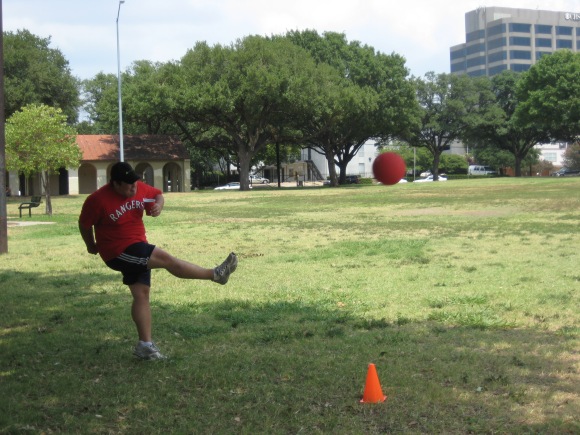
Just thought I’d entertain you this week with a few pictures from our recent kickball event at Cole Park. We had several new friends join us — four of whom, in fact, have just moved to the United States from Spain and have taken jobs teaching Spanish in the Dallas Independent School District. Their English was impeccable and they were excellent kickball players. I think their skills at futbol (soccer) gave them an edge on us.

The Kiser boot. Observe the straight body lines, eye contact, and skill at kicking while holding drink in hand. Superb form. It was probably a foul.

Ryan Porche looking far into outer space after kicking the ball — because that is usually where his ball went. The man was usually at home plate before the ball even hit the ground.

Someone named Claudia decided to engage in waterwars with another someone named Charles. Charles had the last word in the group picture, however, unbeknownst to Claudia.

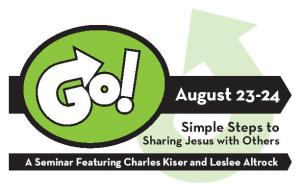
Go! Evangelism Seminar

Charles Kiser —  August 27, 2008 — 5 Comments

Julie and I spent a great weekend with the Highland Church in Memphis. We have so many good memories of Memphis: dear friends live(d) there; Ryan was born there; we were shaped for ministry there both at Harding Grad School and at Highland Church.


Highland invited me to participate in a seminar called “Go! Simple Steps to Sharing Jesus with Others.” Leslee Altrock of Let’s Start Talking also came for a special emphasis on women’s evangelism. I talked about the nature of evangelism, engaging non-church spaces, and developing missional rhythms in life. Here are a few things I learned or was reminded of in my preparation:

  • In the words of Terry Rush, a minister in Tulsa: “God is at work, so relax!”
  • Evangelism is a community task, not an individual one
  • From Bryan Stone’s Evangelism after Christendom (awesome): Evangelism is first about faithful embodiment of the gospel by the people of God before it’s about results and conversions
  • Evangelism is much more holistic than verbal proclamation (though it certainly includes it): 1 Corinthians 11:26 speaks to how the church’s just and merciful practice of the Lord’s Supper is evangelism – literally the proclamation of Jesus’ death
  • God does the “growing”
  • Evangelism begins on the turf of people who are not a part of God’s people
  • Michael Frost’s weekly missional rhythm from the book Exiles, which he calls BELLS: Bless (people every week); Eat (with people every week); Listen (to God every week); Learn (about God and theology every week); Sent (engage non-church spaces with an eye for divine appointments).

Here’s hands-down the most challenging quote I came across:

It is important, therefore, to state and argue for the following premise as clearly and straightforwardly as possible so as to avoid any misunderstanding: while evangelism seeks to draw persons into the life of the church as a way of inviting them to a journey of conversion, the quantitative growth of the church is no positive indication whatsoever that God’s intention of creating a new people is being fulfilled or that God’s reign is breaking into history. It may be in some cases a negative indication, for even cancer may be characterized by rapid growth. It is quite possible to practice idolatry and to grow as a church at the same time. Likewise, the proliferation and growth of churches that perpetuate social divides can hardly be characterized as an extension of the missio Dei. Simply put, the quantitative growth of the church can tell us only that people are attracted to what they find in the church or are having some perceived need or want met by the church. It tells us nothing about whether the politics of God’s reign is being embodied or whether a conversion to that reign is taking place. (Bryan Stone, Evangelism After Christendom, 271)

Whoa. That kind of comment will send you back to the drawing board!

The great thing about a speaking engagement like this weekend is the way it personally enriches me, and hopefully the way it will enrich Storyline in the future.

Well, friends, it’s finally here. Check out the website and leave a comment here with some feedback if you’d like — either for encouragement or improvement. We’re excited about it and are glad this part of the project is behind us. This website has been a way for us to draw together all we’re about into one place. Developing this website has been a “vision check” of sorts: it has reminded us again and again why we’re doing what we’re doing.

You can click on www.storylinecommunity.com or the picture above.